

Construction projects are not short of plans.
There is a Master Schedule, a lookahead, coordination meetings, weekly plans and progress updates. Yet a project can still struggle to answer a basic question after a missed week: what did we actually commit to, what happened, and why?
That is an accountability problem. And it is different from simply having more planning.
The Last Planner System is built around the difference between work that SHOULD happen, work that CAN happen, work the team says WILL happen and what DID happen.
The person closest to the work, the Last Planner, is accountable for assigning and completing the work and is empowered to make commitments, or not make them. That matters because a reliable promise has to come from someone who understands the conditions on the ground.
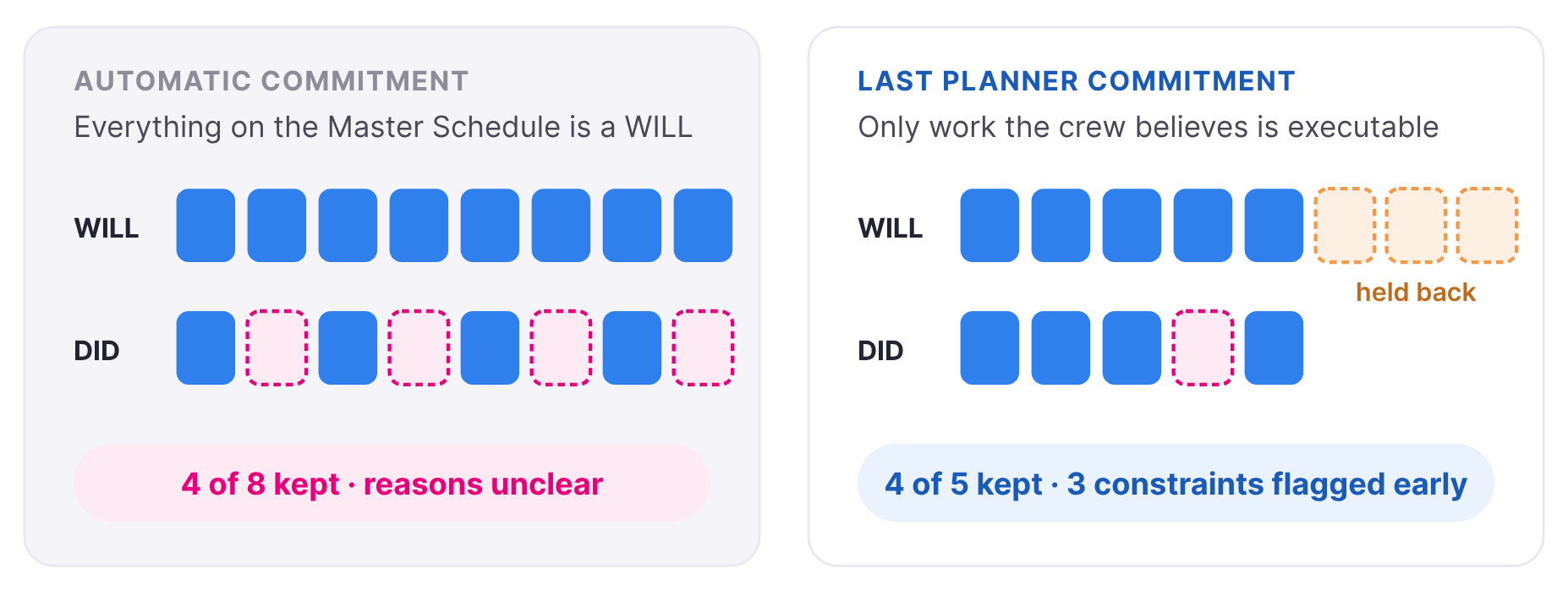
If every activity on the Master Schedule is treated as an automatic commitment, accountability becomes fuzzy. The team is being measured against work it may never have believed was executable in the first place.
When work is not completed, projects often move quickly to the next update. The activity is given a new date, the forecast moves and attention shifts to that new date.
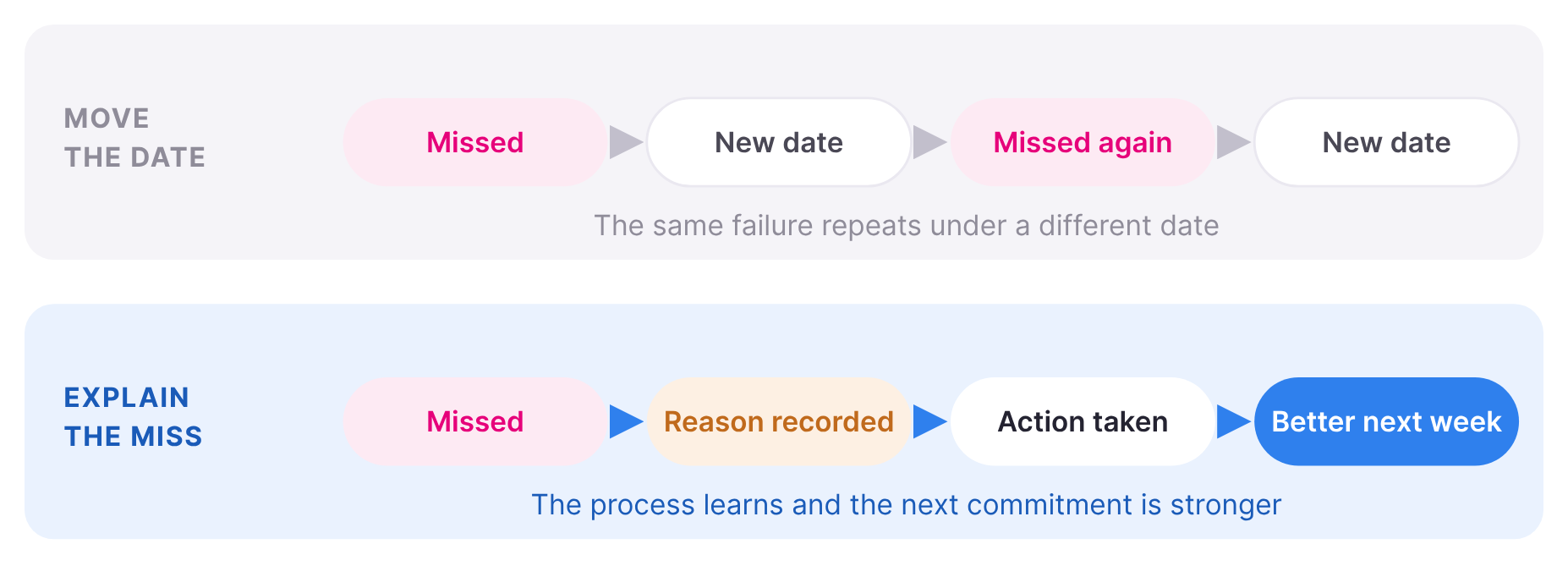
But the missed commitment contains useful information:
Last Planner explicitly includes learning after DID: calculate and analyse PPC, then act on reasons for non-completion. That is what stops the same planning failure being repeated under a different date.
Good accountability makes ownership and evidence clearer. It should not turn every missed task into an argument about fault.
If a crew made a sound commitment and an unforeseen breakdown stopped the work, that is different from work entering the week with an unresolved design constraint. Both affect delivery, but they point to different actions.
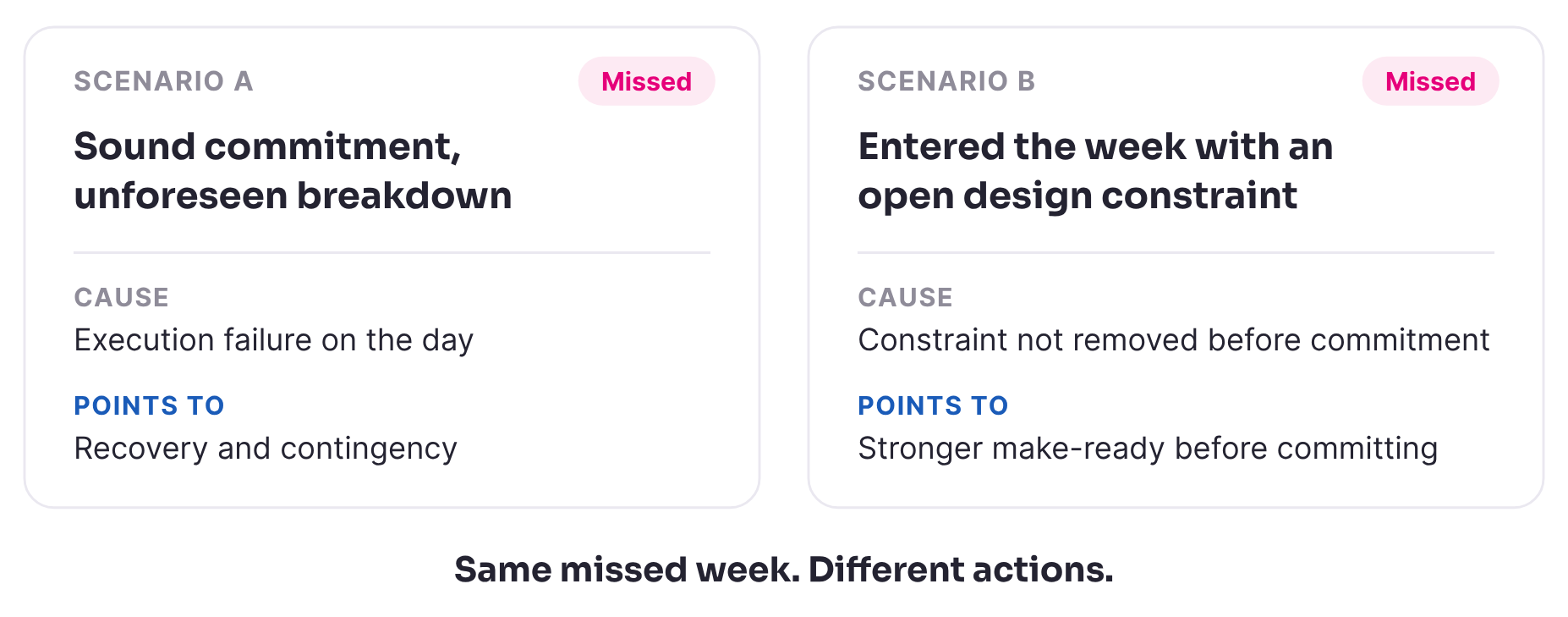
The value comes from keeping the promise, the outcome and the explanation connected. That gives the team something specific to improve.
The promise
What the crew committed to
The outcome
What actually got done
The explanation
Why the two differed
Uconia's project-controls approach connects P6 with detailed site-level tasks. The people doing the work can review commitments, update progress and flag blockers, while the information rolls back into lookaheads, issue tracking, progress trends and KPIs.
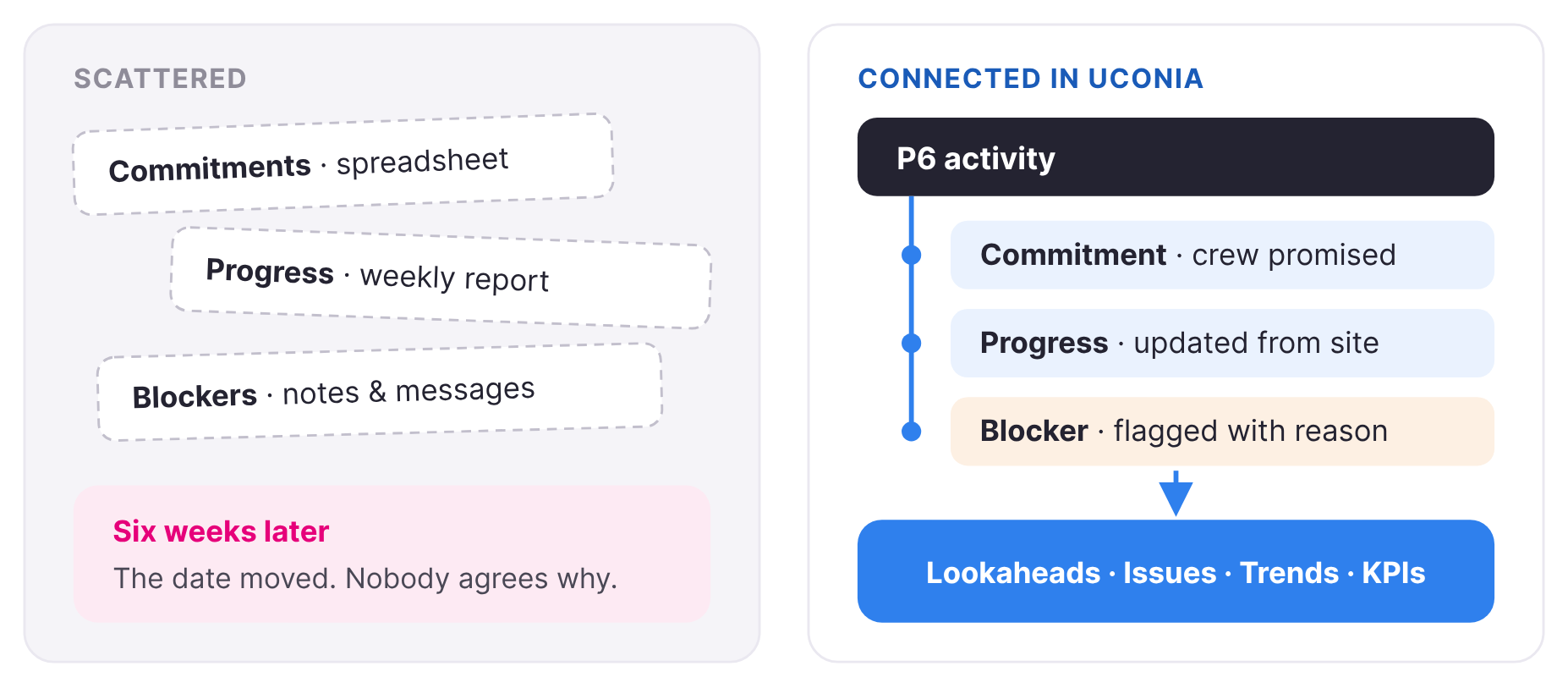
That connection matters because accountability gets weaker when commitments live in one place, progress in another and blockers in someone's notes or messages. Six weeks later, everyone may agree that the date moved while remembering the reason differently.
A traceable execution record gives the project a better basis for planning conversations now and, where delay becomes commercially relevant, better evidence of what actually happened.
A procedure is not proof of control. The test is whether the project can follow work from SHOULD to CAN to WILL to DID and learn from the difference.
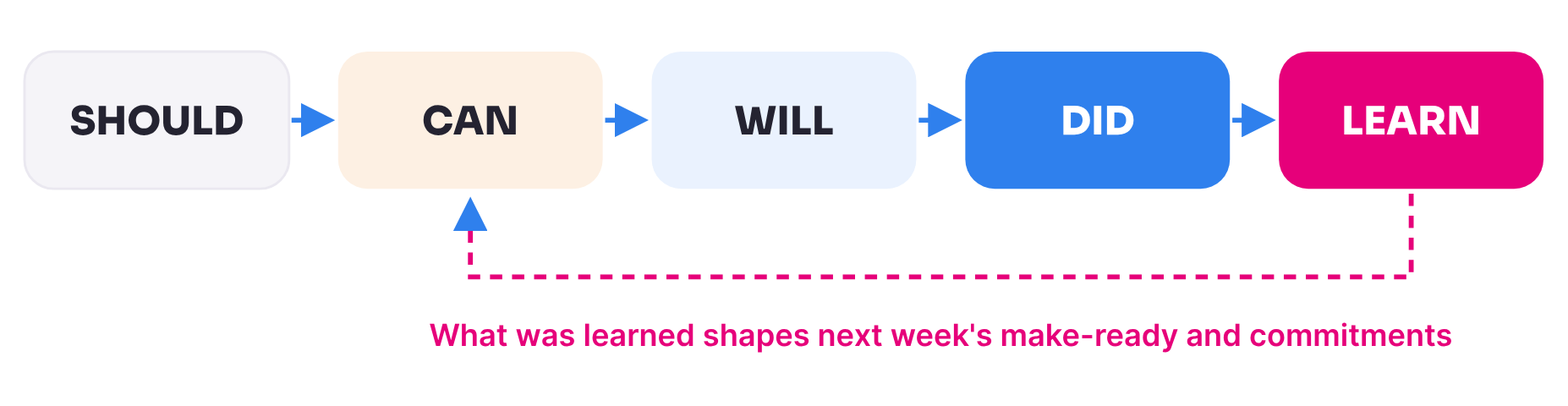
When commitments are visible and reasons for non-completion are captured, accountability becomes practical. Teams know what they promised, where the promise failed and what needs to change next week.
That is a much stronger operating habit than simply moving the date.