
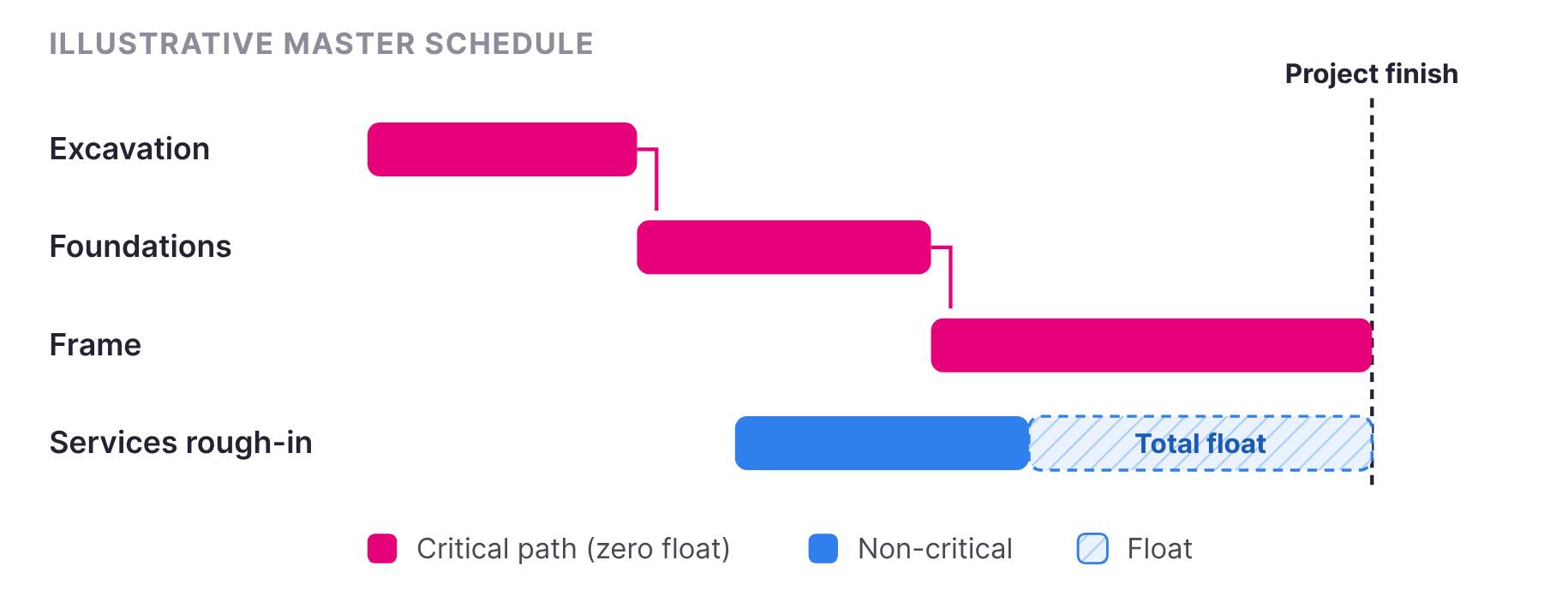
Float is often treated like spare time sitting safely inside the Master Schedule. It is not.
Total float is the amount an activity can slip before it delays the project's overall completion date. Free float is narrower: how much it can slip before delaying its immediate successor. Both are products of the Master Schedule logic, and both can change as the Master Schedule is updated.
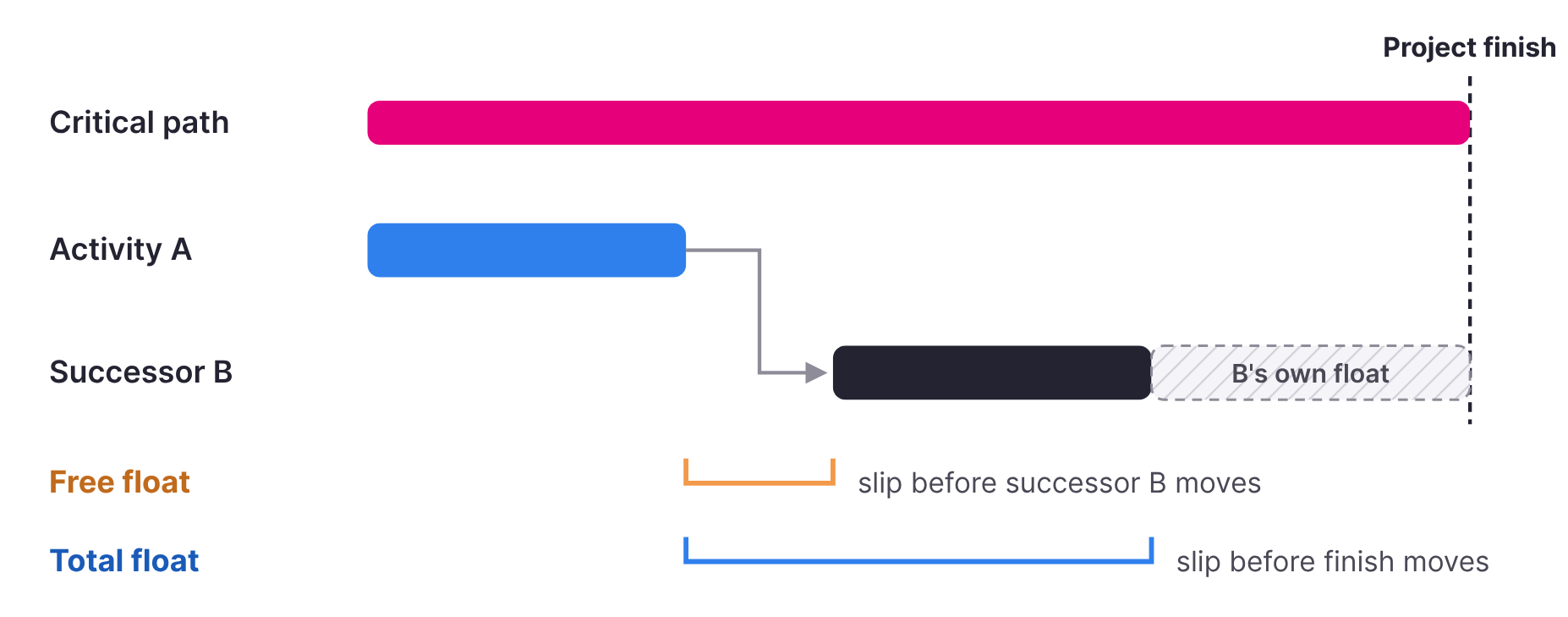
That makes float useful as an early-warning measure, but only if the project understands what is consuming it.
In CPM, the critical path is the longest chain of dependent activities through the network. Activities with zero or negative total float are critical. Slip one of them and the project finish moves with it.
Non-critical activities have some breathing room, but that breathing room is not permanent. When the data date moves and P6 recalculates remaining durations, forecast dates, total float and the critical path can all change.
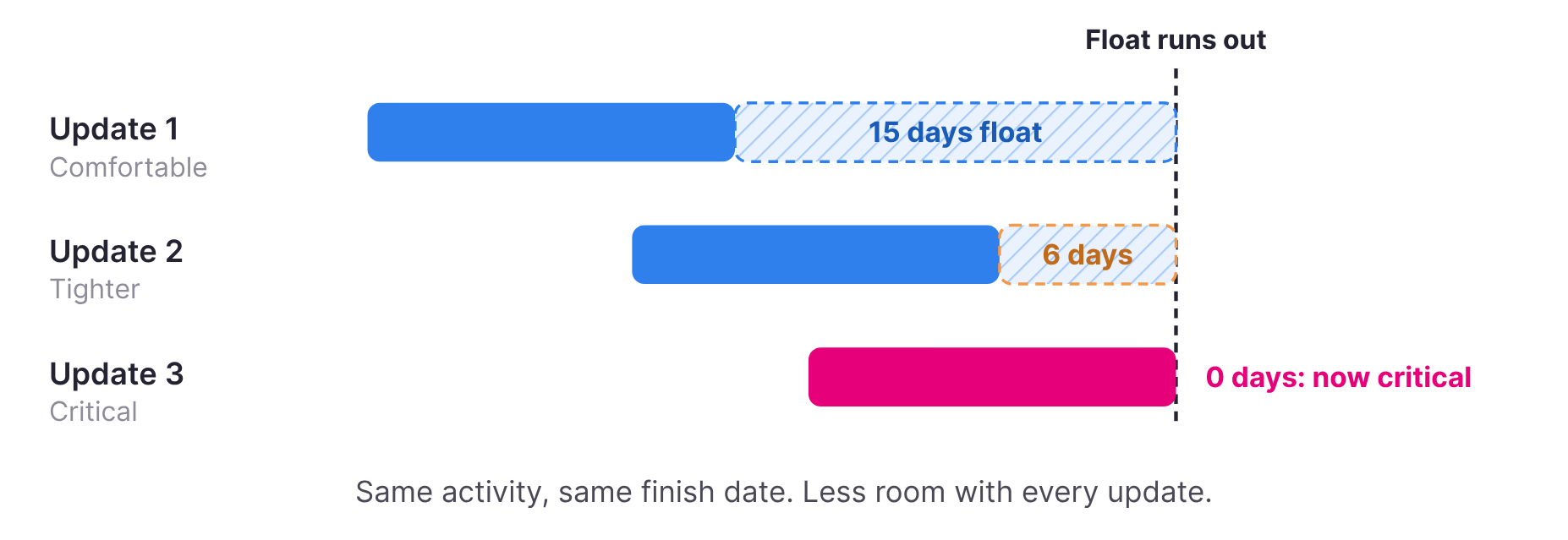
A Master Schedule can therefore look comfortable in one update and materially tighter in the next.
A site constraint may begin as something operational: an approval is late, access is unavailable, information is missing or prerequisite work is incomplete.
If the constraint is identified and removed early, the planned start may still hold. If it remains unresolved, the activity can slip. At first, that slip may only consume available float. Keep going and the activity can become critical or push work that already sits on the critical path.
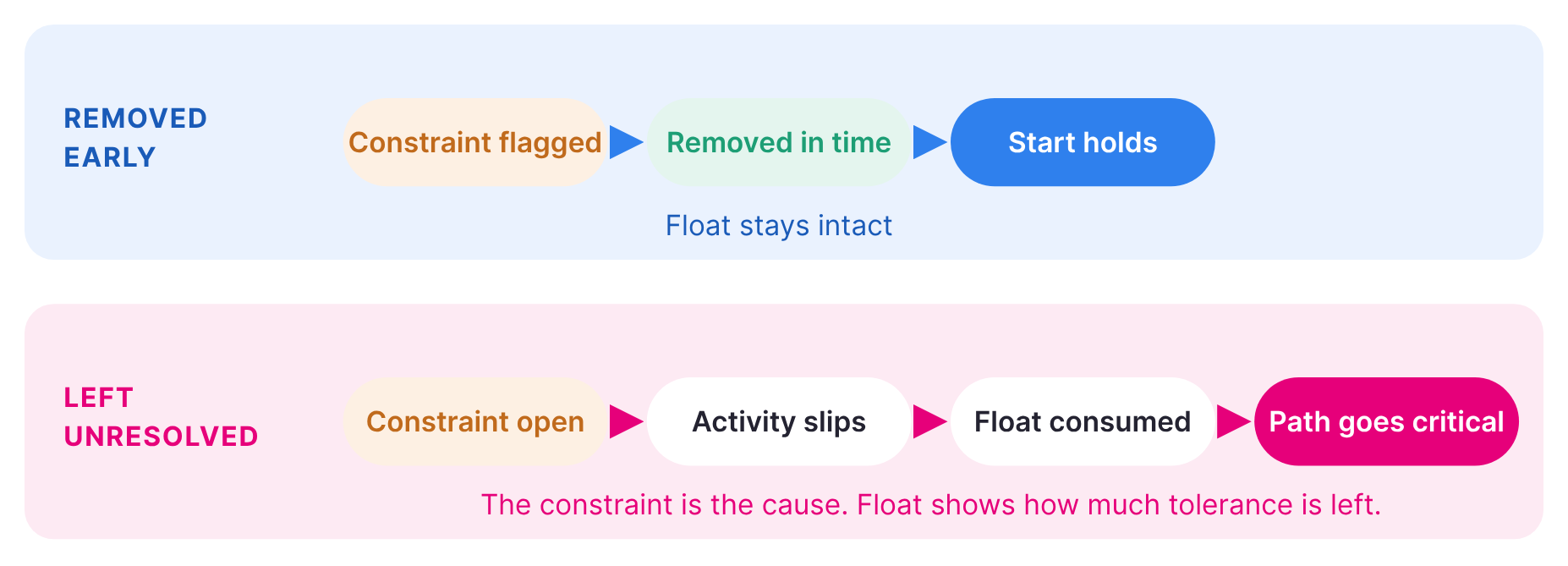
This is why constraints and float should not be discussed as separate topics. One is often the cause; the other shows how much tolerance remains in the Master Schedule.
A delay on projects is defined as something that reduces available float, even with no completion impact yet, or pushes the critical path and creates a completion impact.
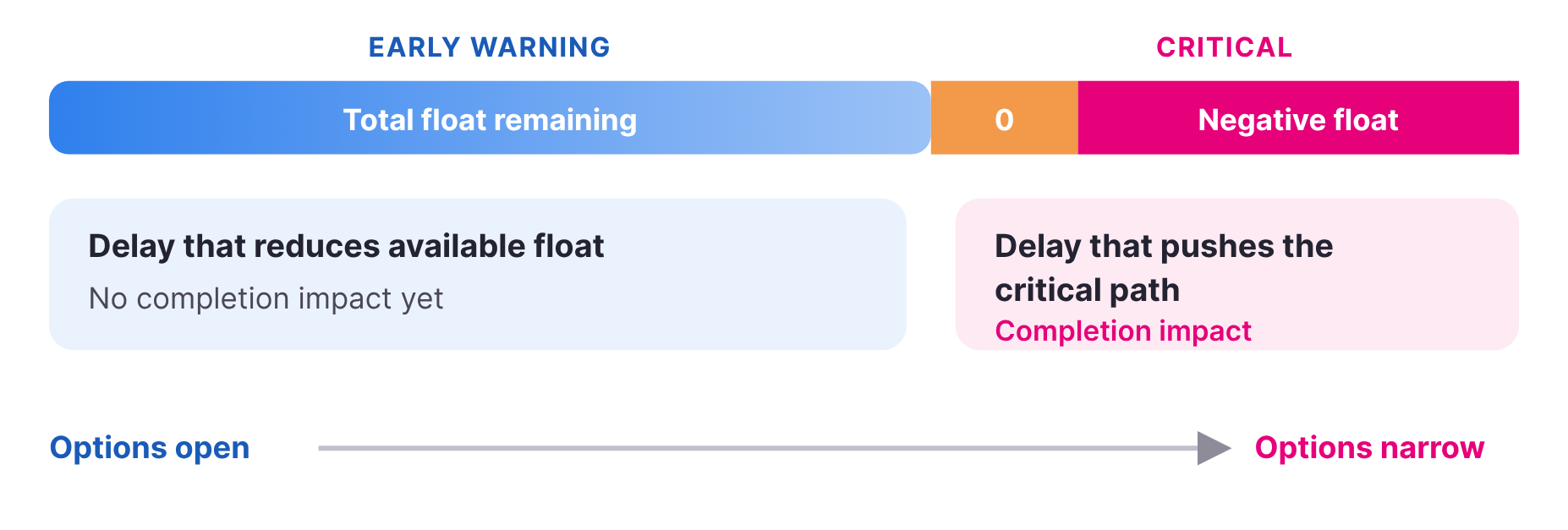
That distinction is important. Waiting until the contractual completion date moves means waiting until the warning has already become an outcome.
An activity burning through float can be an earlier sign that the project needs attention. The team still has options while float remains. Once the path is critical, those options narrow.
The Master Schedule can calculate float, but it cannot remove a site constraint by itself. The project needs the operational context behind the movement.
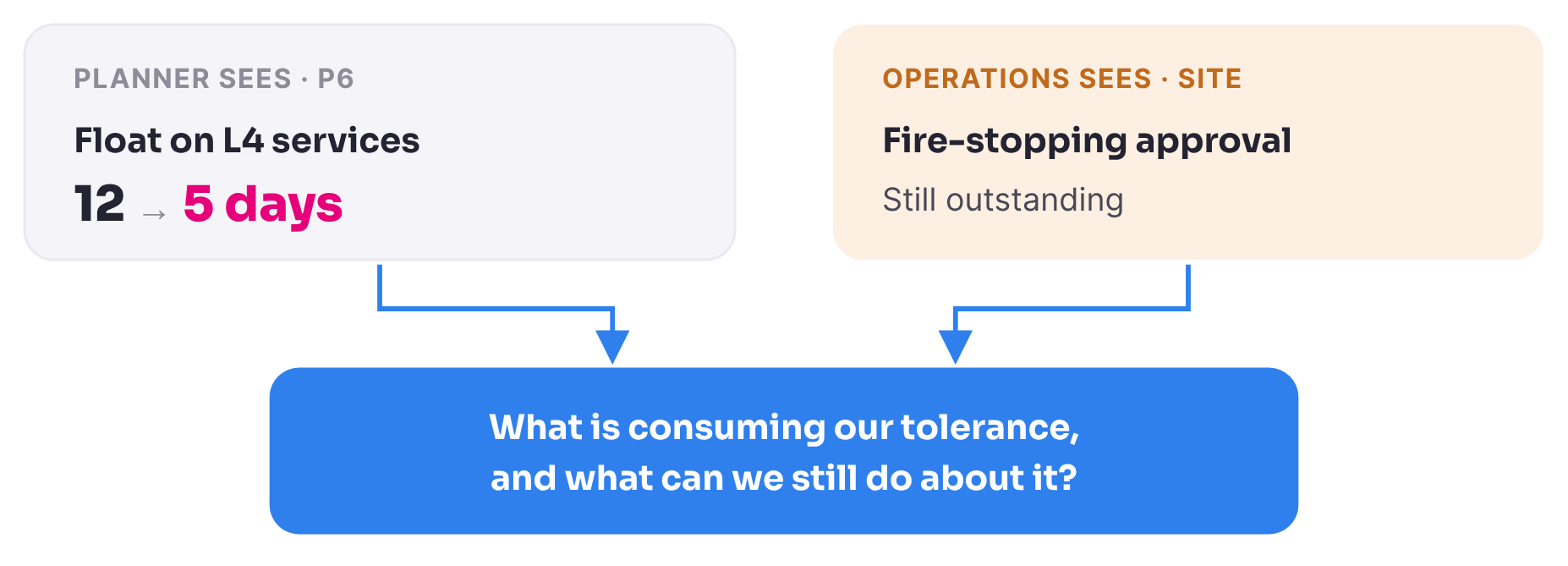
If planners can see that float is reducing while operations can see the unresolved issue causing it, the team has a much stronger basis for intervention.
The question changes from
"Why are we late?"
To
"What is consuming our tolerance, and what can we still do about it?"
That is a better control conversation because it happens before the final date is lost.
Float is not a pot of free days to spend casually. It is a measure of how much flexibility remains in the logic network.

Connect those three and the Master Schedule becomes a much stronger early-warning tool.