
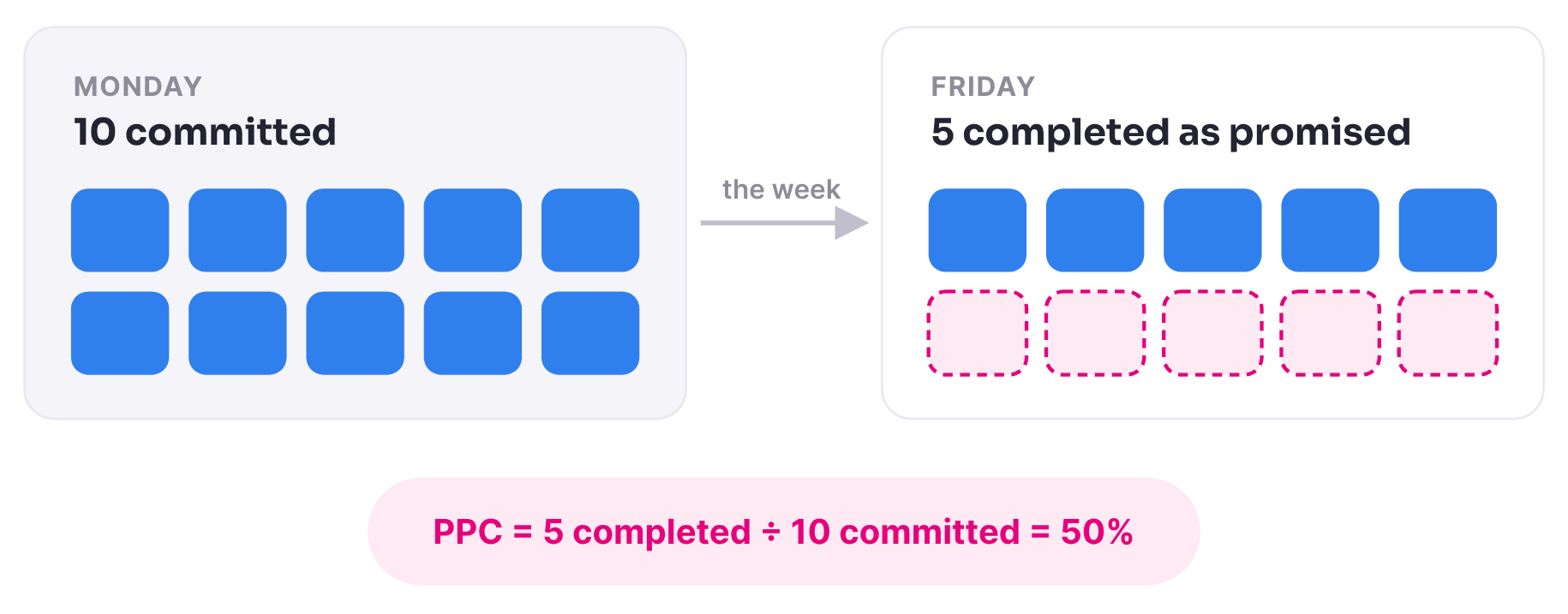
A weekly plan can be busy, detailed and still be unreliable.
If a team commits to ten activities and only five are completed as promised, the useful question is not whether the plan looked good on Monday. It is why the commitments and the outcome were so far apart by Friday.
Percent Plan Complete, or PPC, gives teams a simple way to measure that reliability.
In the Last Planner System, PPC measures the percentage of weekly assignments completed as planned. It is a measure of planning-system performance at the Weekly Work Plan level.
Percent Plan Complete
PPC = assignments completed as planned ÷ total assignments planned × 100
That distinction matters. PPC is not the same as overall project progress. A project can report progress while still making unreliable short-term promises. PPC asks a narrower question: did we complete what we said we would complete this week?
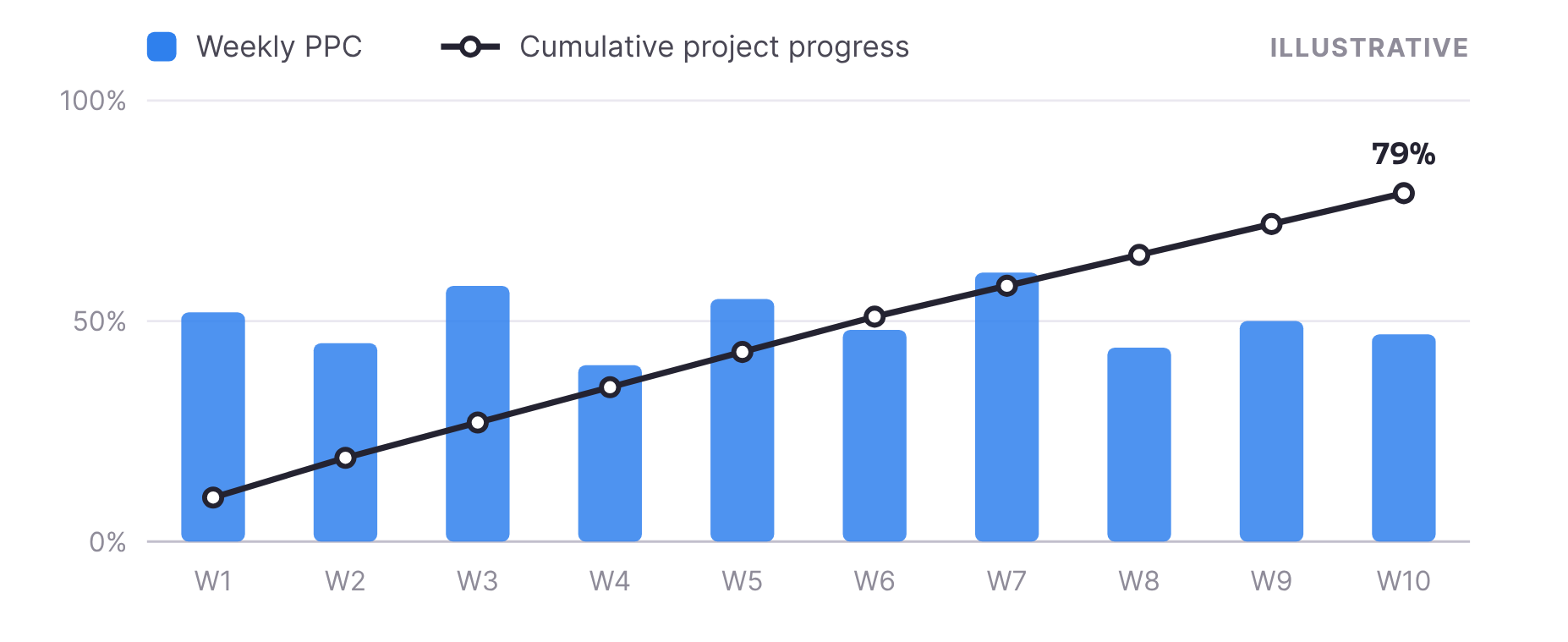
When that number is tracked consistently, teams get a much clearer view of whether weekly planning is producing dependable work.
A low PPC does not automatically mean a contractor is underperforming. It tells you that WILL and DID are not matching closely enough. The reason still needs to be understood.
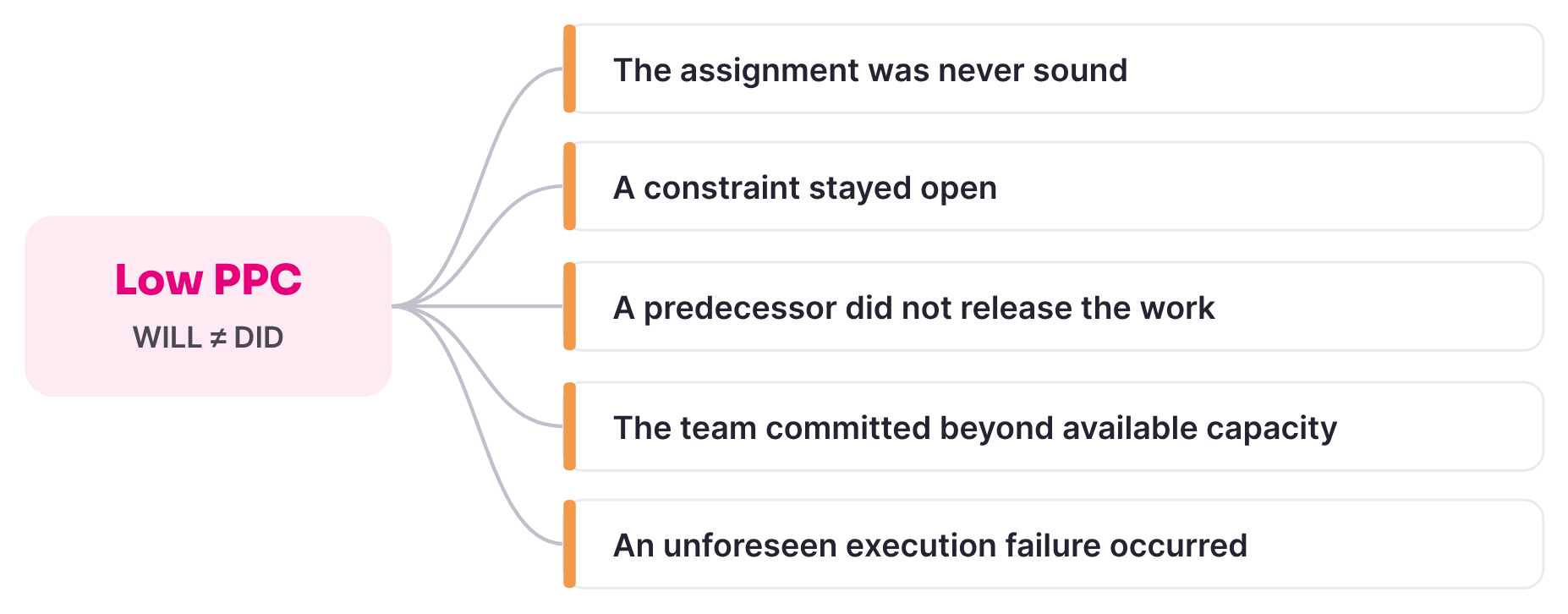
The assignment may never have been sound. A constraint may have remained open. A predecessor may have failed to release the work. The team may have committed beyond available capacity. Or an unforeseen execution failure may have occurred.
Treating PPC as a blame score wastes the information. Treating it as the start of an investigation makes it useful.
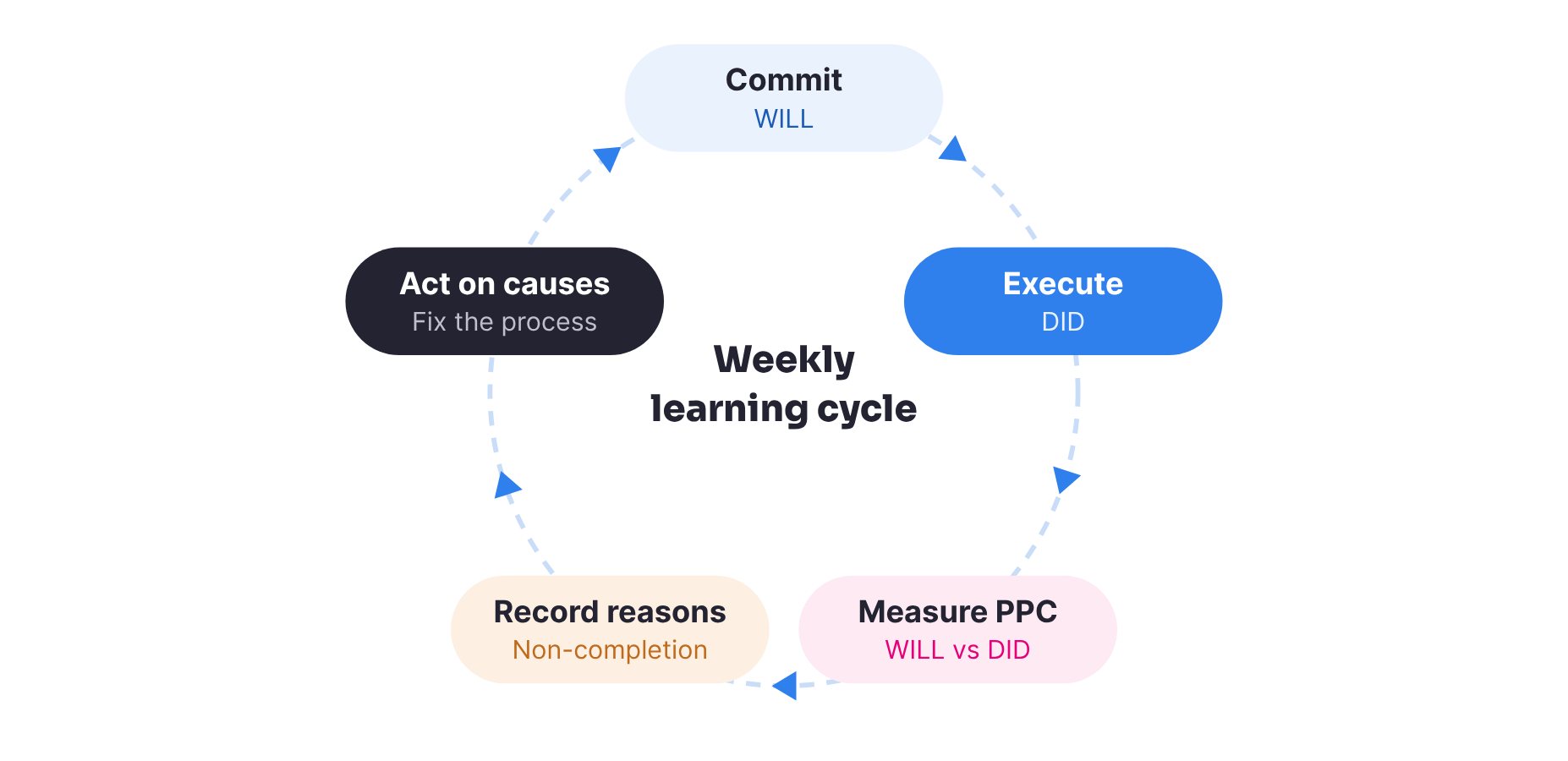
The Last Planner System does not stop at calculating PPC. Root causes for plan failure are identified and acted on. That creates a weekly learning cycle instead of a weekly reporting exercise.
Recurring reasons point to specific parts of the planning process:
If you keep seeing
Look at
The same constraint appearing
The make-ready process
Commitments regularly too large
Assignment sizing or capacity planning
Prerequisite work repeatedly failing
The handoff between trades
PPC makes those patterns harder to ignore because the team can connect the missed promise to a recorded reason.
On a recent project Uconia was involved in, PPC moved from 19% to 76%.
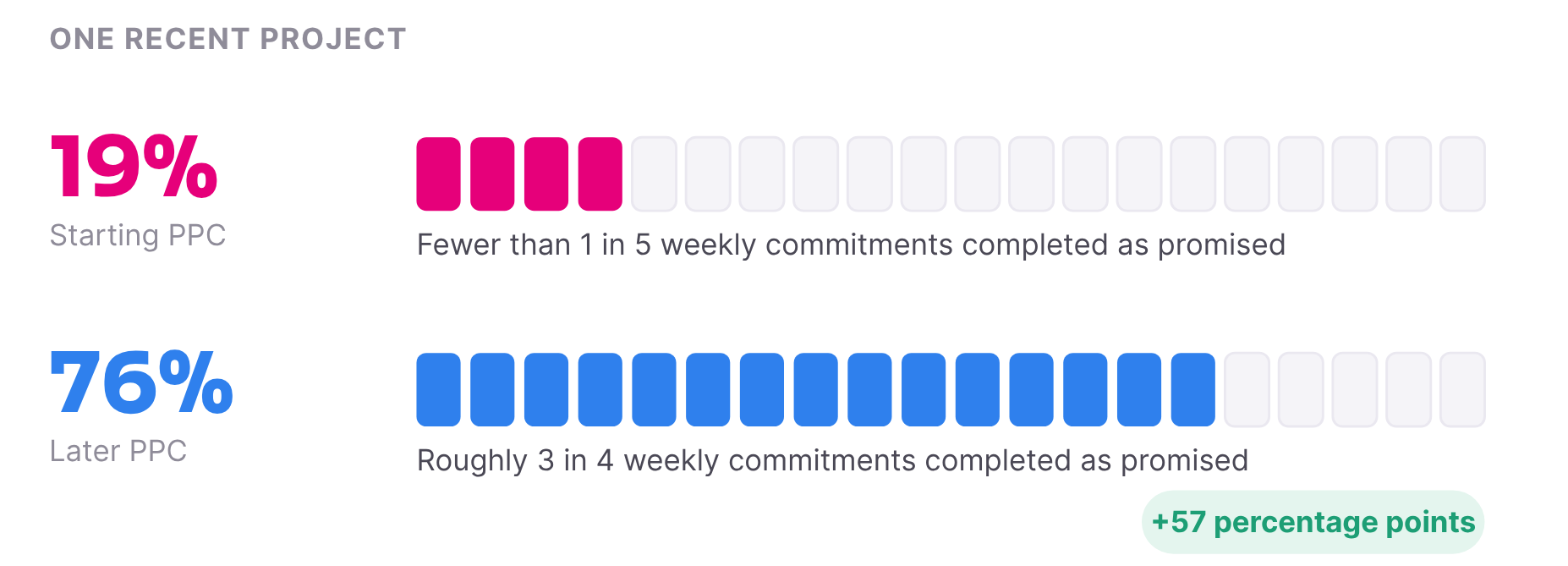
That is a major change in weekly planning reliability. At 19%, fewer than one in five weekly commitments were being completed as promised. At 76%, roughly three in four were.
Improvements like this rarely come down to a single cause, and we are not going to claim one here.
What PPC did provide was visibility. The project could measure how commitments were translating into completed work instead of relying on a general sense that the week had gone well or badly.
The Master Schedule tells the project where it needs to go. PPC tells the team whether its short-term planning process is reliably getting it there.
The calculation is simple. The conversation it creates is more valuable:

That is the point of PPC. Make reliability visible, learn from the misses and make the next week more achievable than the last.