
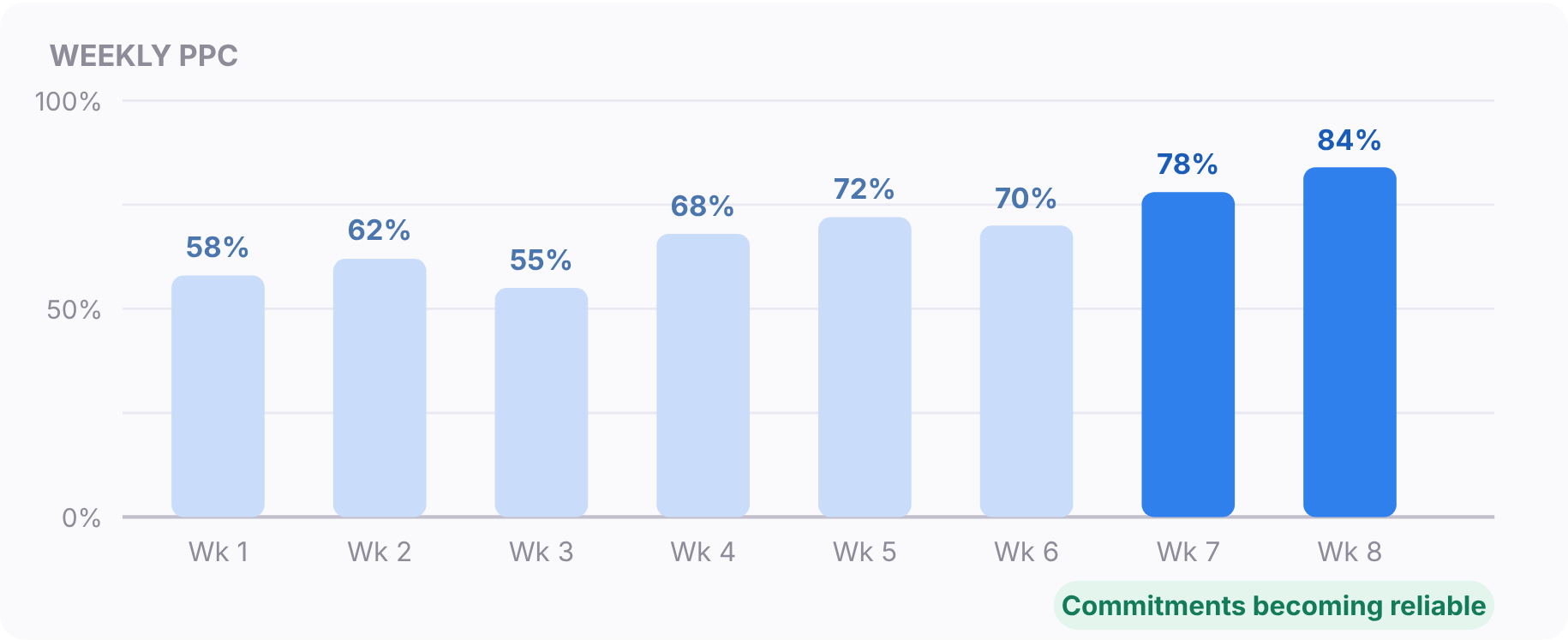
But that doesn't necessarily tell you how reliably work is being delivered week to week.
PPC is a measure used within the Last Planner System to assess the reliability of a Weekly Work Plan. Put simply, it compares what a team committed to completing during the week with what was actually completed.
What is PPC?
The calculation itself is simple:
PPC = Completed commitments ÷ Planned commitments × 100
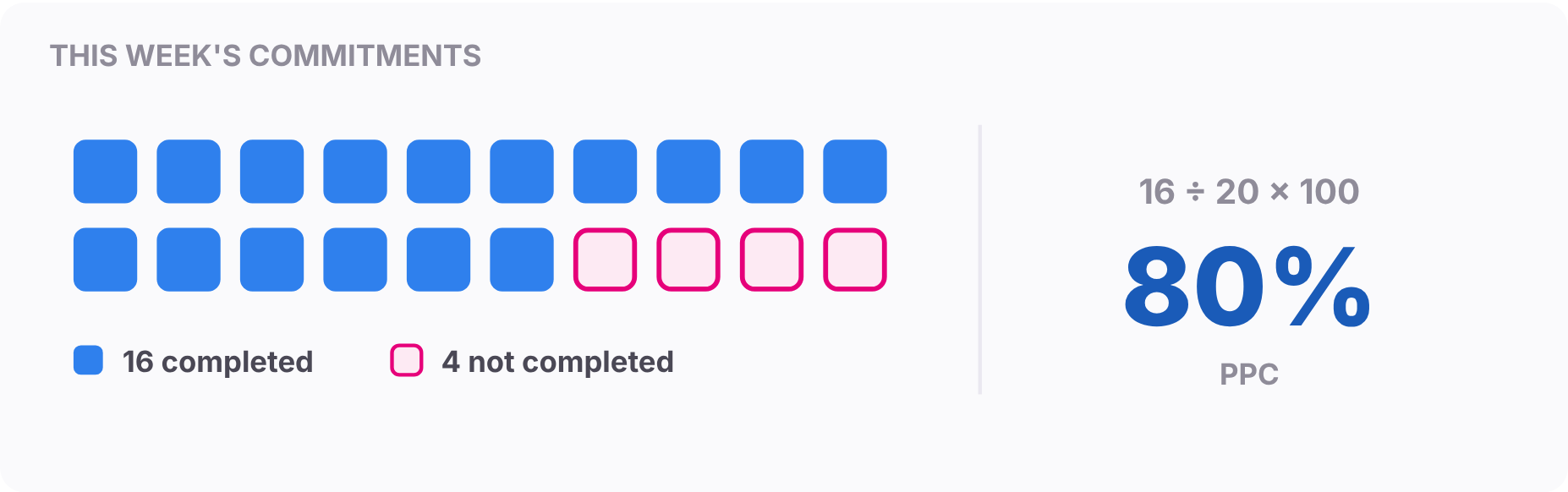
If a team commits to 20 tasks and completes 16, its PPC for that week is 80%.
PPC answers a much more useful question:
How reliably are we delivering what we said we would deliver?
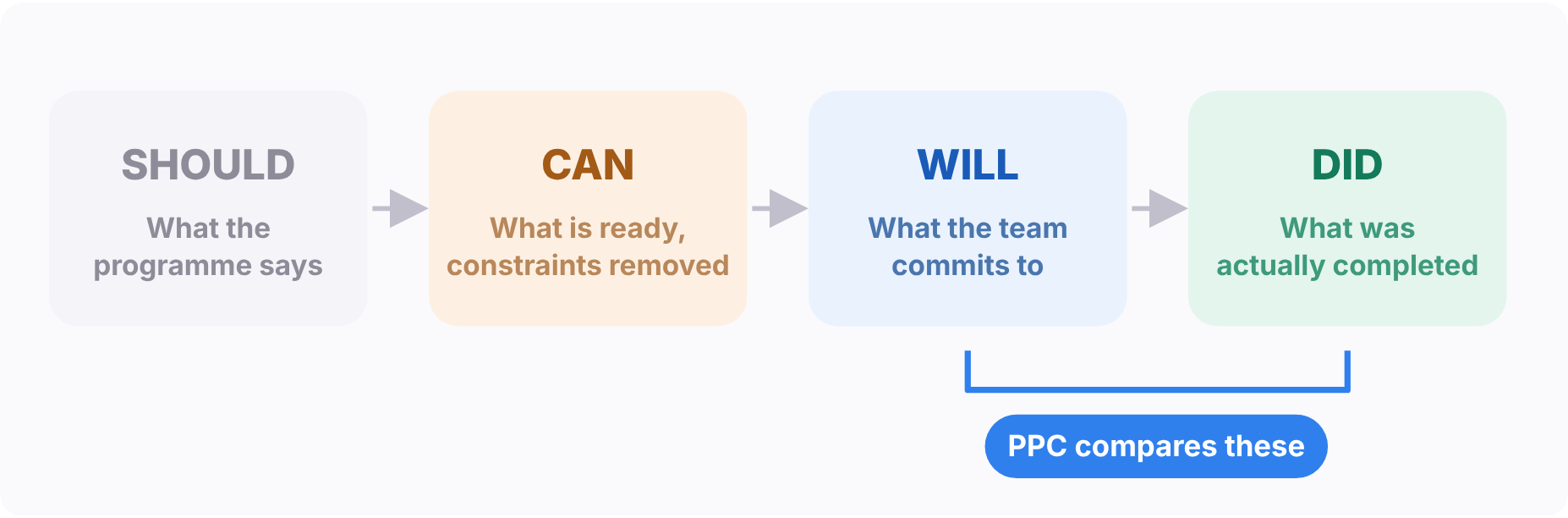
The Last Planner System describes this as comparing WILL with DID. The team first identifies what SHOULD happen, determines what CAN realistically happen, commits to what WILL happen, and then records what actually DID happen.
A programme can contain an activity that SHOULD happen next week. But if the design isn't complete, materials aren't available, prerequisite work is unfinished or the required labour and equipment aren't available, that activity may not actually be executable.
A high PPC doesn't automatically mean a team is highly productive.
The Lean Construction Institute specifically separates the two: PPC measures the reliability of the planning system, while productivity measures how much work gets done. They're different measures, although the Last Planner System workbook notes a strong correlation between increasing PPC and increasing productivity.
The aim is to create realistic commitments based on work that is actually ready, then learn when those commitments aren't met.
Partially completed work doesn't receive partial credit because unfinished work often can't be cleanly handed over to the next production unit. That unfinished handoff can then affect the work that follows.
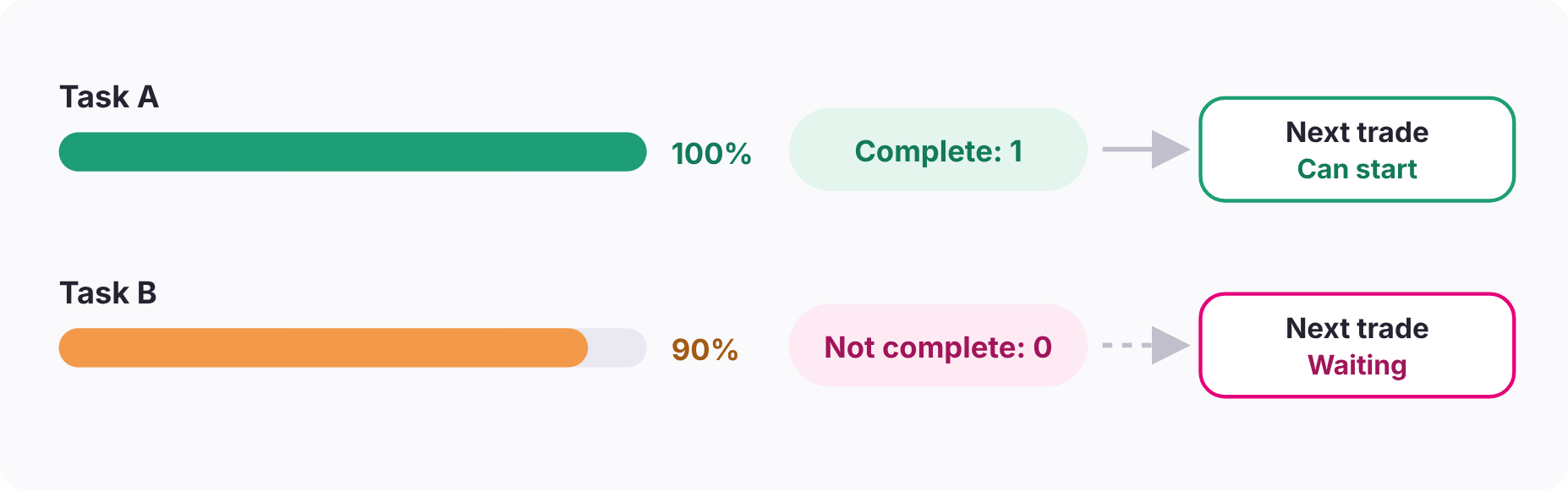
This makes PPC useful beyond the individual activity.
When one team can reliably release completed work to the next, downstream teams can plan their own work with greater confidence. The workbook links increasing PPC with more reliable flow and higher throughput across the production system.
If PPC drops, the next question shouldn't be:
It should be:
“Why did the plan fail?”
The workbook identifies reasons including missing materials, incomplete prerequisite work, unanswered information requests, lack of access, labour shortages, equipment problems, coordination issues and design changes.
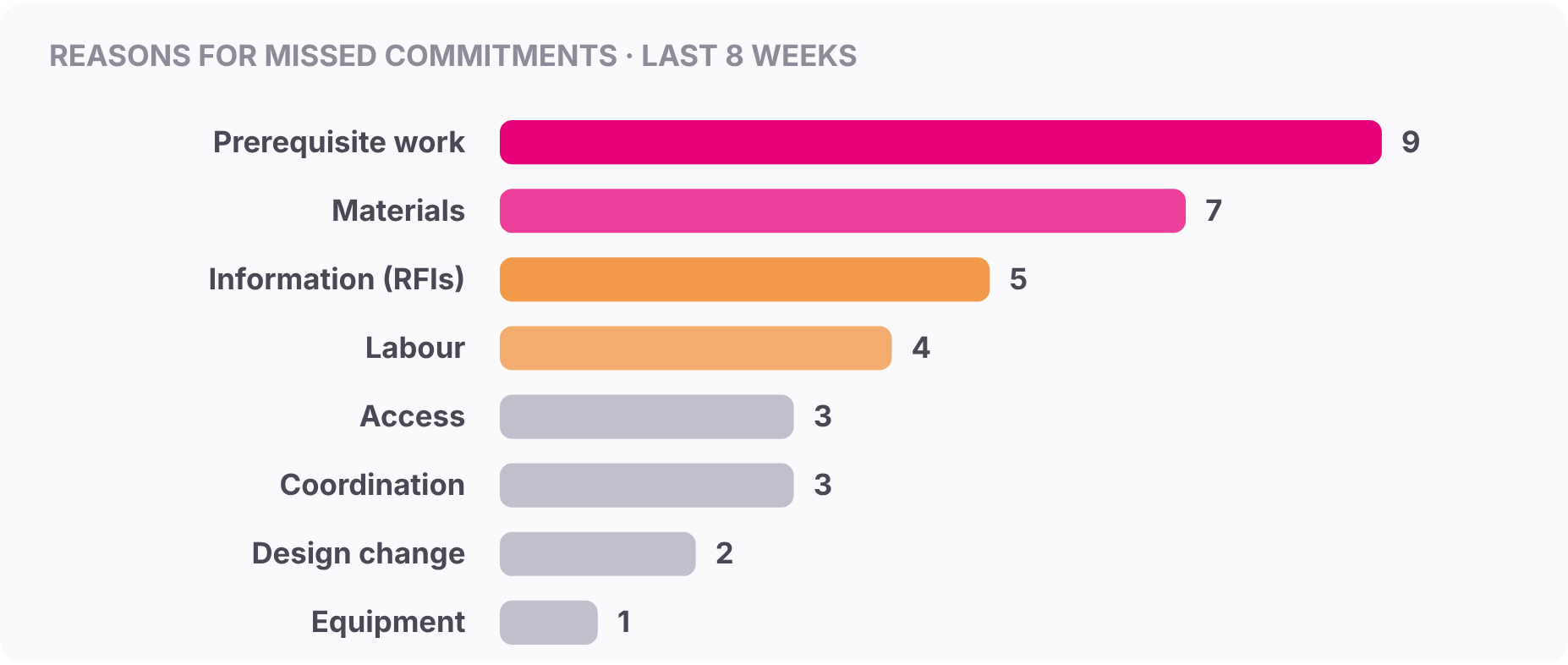
Tracking those reasons over time turns PPC from a weekly score into a way of improving planning.
It tells you whether the weekly plan can be trusted, and when it can't, it gives the team somewhere concrete to start looking.
Uconia connects Primavera P6 with the day-to-day execution of work on site, helping progress, constraints and weekly commitments reach the planning process closer to the point where that information is created.