
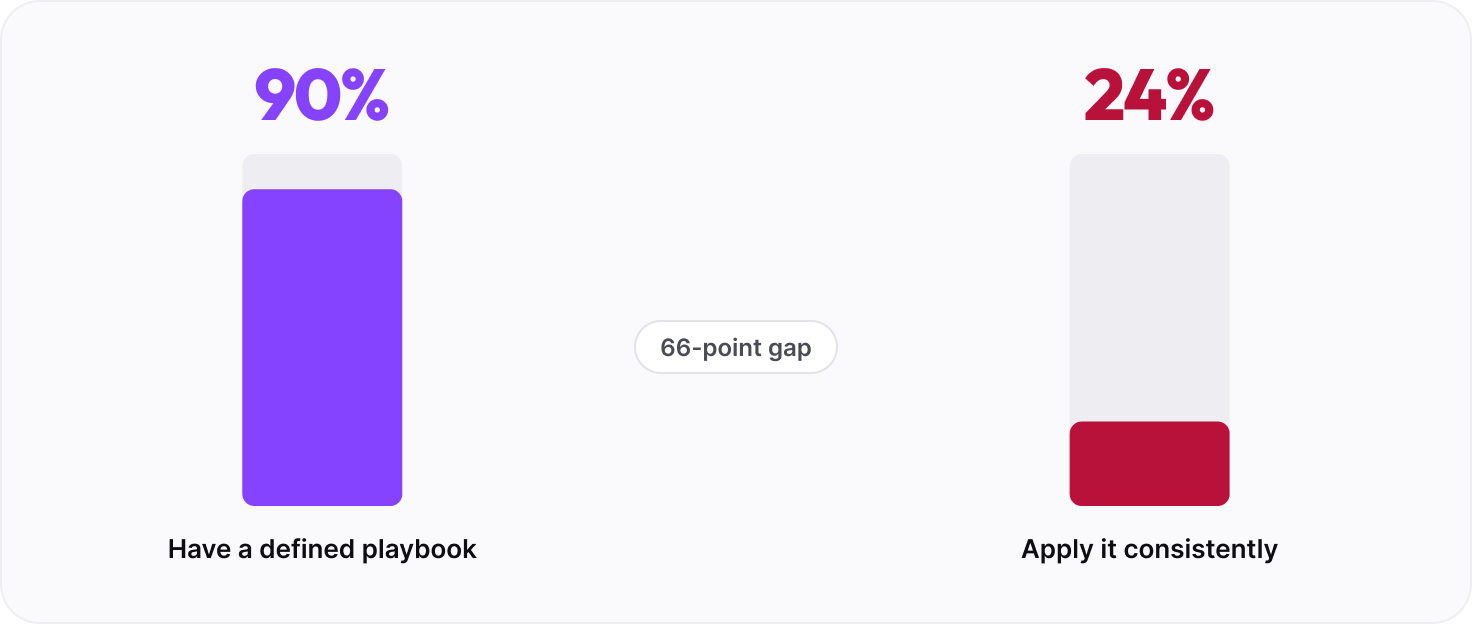
The industry mostly knows what good planning looks like. The gap is doing it every week.
Construction isn’t short of planning processes.
Most major contractors already have defined ways of managing projects.
There are procedures for programme updates, lookahead planning, weekly meetings, progress reporting, constraints, quality and handover. Teams know they should plan ahead, identify what could stop upcoming work and track whether commitments were actually delivered.
The problem is what happens when the project gets busy.
Research cited in Beyond the Critical Path found that nearly 90% of contractors have a defined project management playbook, yet only 24% apply it consistently across projects.
That gap says a lot.
If the processes already exist, creating another framework probably isn’t going to fix the problem. And another piece of software won’t automatically fix it either.
The harder part is getting the things we already know improve delivery to happen consistently, every week, across every project.
Ask an experienced project team what good planning looks like and very little of the answer will be surprising.
The master programme needs to be maintained. Upcoming work should be reviewed before it reaches site. Constraints need to be identified and removed. Contractors need to make realistic commitments. Progress needs to be recorded. When something doesn’t happen as planned, the team needs to understand why.
None of this is particularly radical.
And most contractors have processes designed to make it happen.
Yet having a process written down and having that process shape what happens on a Tuesday morning on site are very different things.
That’s where the gap opens.
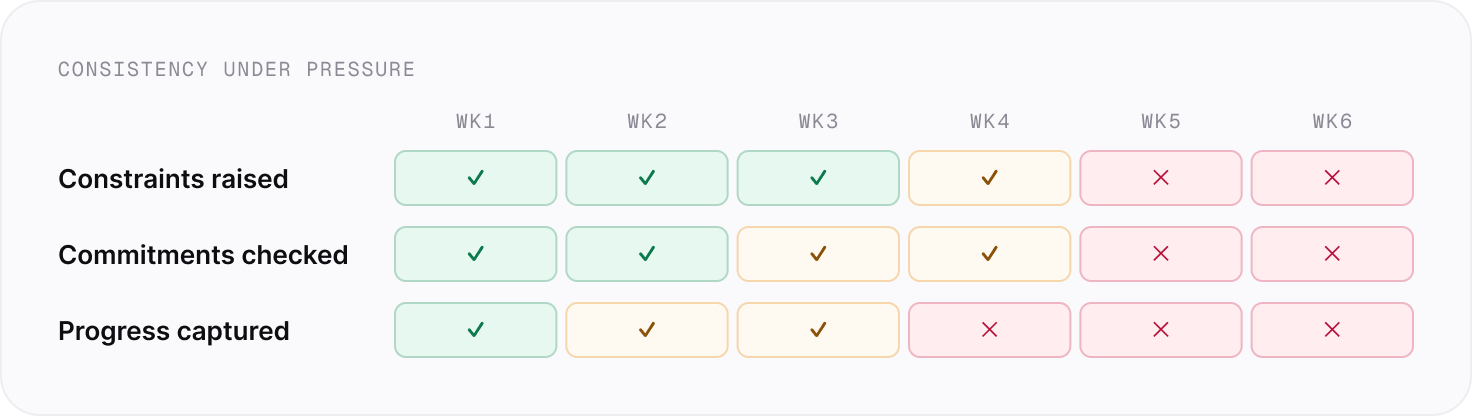
A project starts with the right routines. Meetings happen. Plans are updated. Actions are assigned. Then pressure increases.
People get busy.
A meeting gets shortened because something more urgent has happened on site. An update doesn’t come in. A constraint is discussed but never properly recorded. Someone agrees to complete something by Friday, but the commitment isn’t followed up the next week.
Nobody has deliberately abandoned the process.
It simply becomes less consistent.
And once that starts happening across different teams and packages, the project can have a perfectly good management playbook on paper while operating very differently in practice.
Take weekly planning.
The value doesn’t come from holding a weekly planning meeting.
It comes from what happens around that meeting.
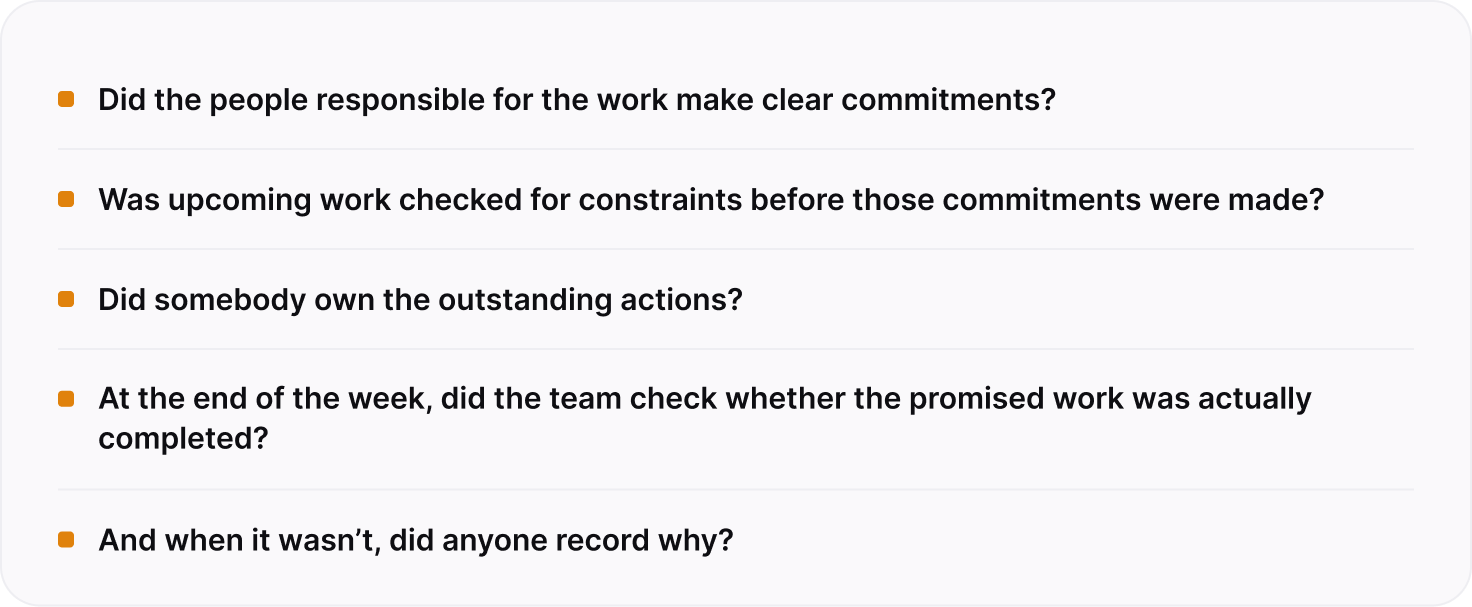
Do that consistently and the project starts building a much clearer picture of how reliably work is being delivered.
Do it occasionally and the process becomes another meeting in the calendar.
The same applies to constraint management.
A project can have an excellent constraint register. But if issues aren’t consistently recorded, assigned, connected to the work they affect and followed through to closure, the existence of the register doesn’t achieve much.
The process itself isn’t enough.
The behaviour around it is what makes it useful.
There’s sometimes a negative connotation around accountability in construction.
It can sound like finding out who caused the problem.
That’s not particularly useful.
Good accountability starts much earlier, with clarity around what everyone agreed would happen.
A team commits to completing an activity this week.
That commitment should be visible.
If the activity is completed, great.
If it isn’t, the useful question isn’t immediately “Whose fault was it?”
It’s “Why didn’t it happen?”
Maybe the team couldn’t get access. Perhaps information wasn’t available. A predecessor may not have finished. Materials might have arrived late. Or perhaps the original commitment simply wasn’t realistic.
Now the project has something it can learn from.
If the same reason keeps appearing, there’s a pattern worth addressing.
Without that record, the conversation becomes much more subjective. People remember events differently, commitments become less clear and the project can spend more time debating what happened than understanding why it keeps happening.
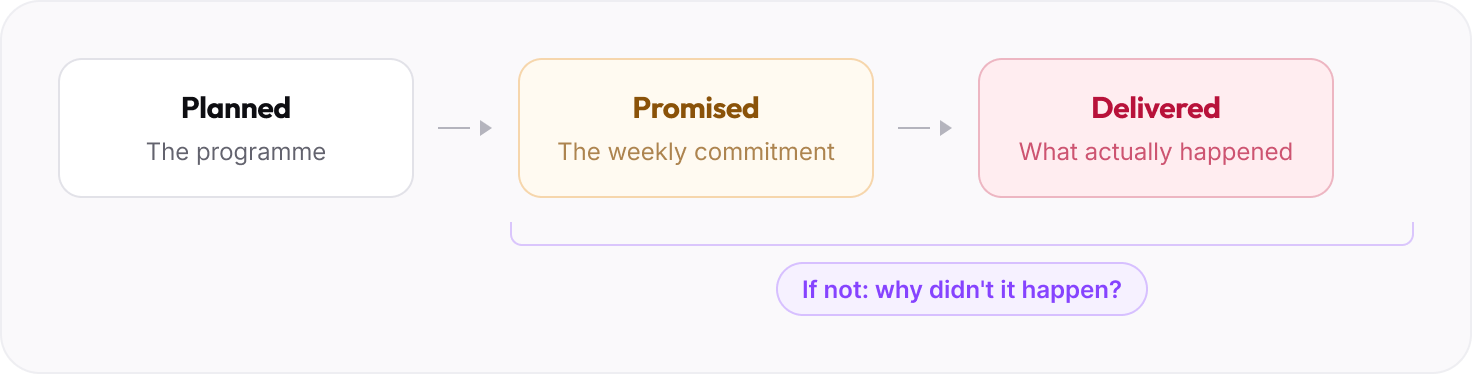
Accountability works when there’s a clear line between what was planned, what was promised and what was actually delivered.
Projects often respond to problems by increasing the intensity of management.
More meetings.
More reporting.
More trackers.
More requests for updates.
For a while, that can create the impression of greater control.
But adding another layer of process doesn’t necessarily make the existing process more reliable.
A better question is whether the basic planning routines are happening consistently
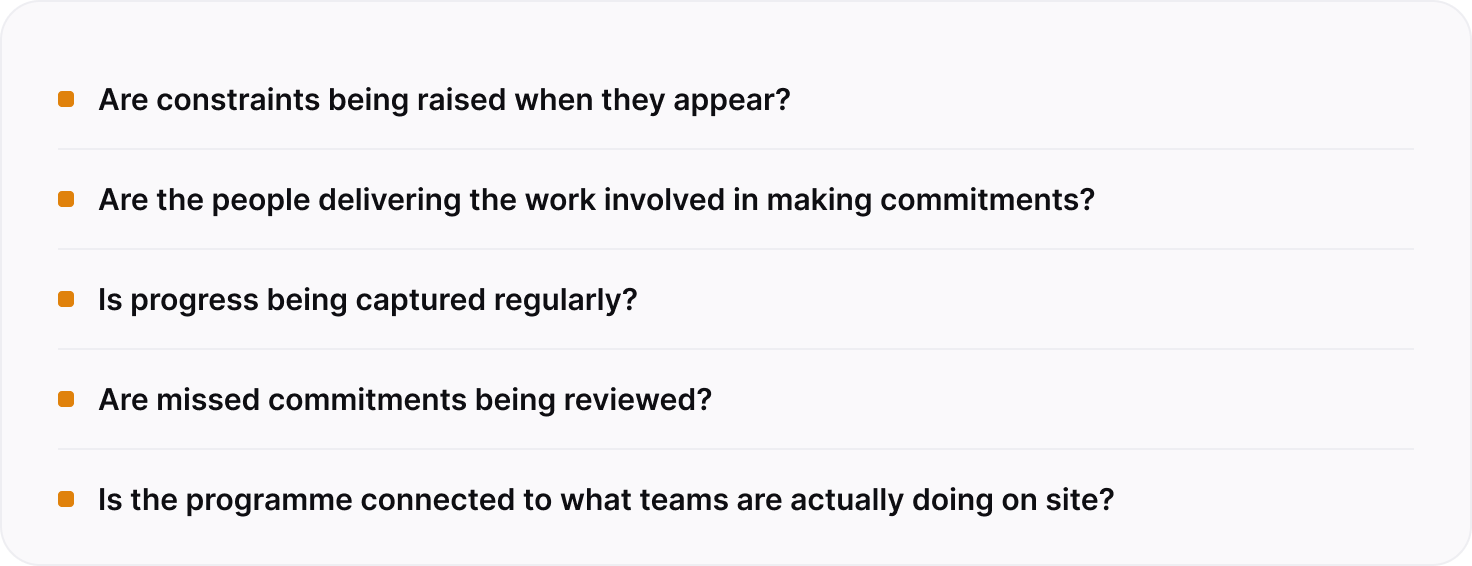
These aren’t things that become valuable because they’re done once during a particularly difficult week.
Their value comes from repetition.
Week after week.
That’s operational discipline.
And it’s much harder to build than another dashboard.
Construction technology is often sold with the promise that introducing a new platform will change how a project performs.
Sometimes it can help.
But installing software doesn’t create discipline any more than writing a project management playbook guarantees people will follow it.
In fact, technology can make the problem worse if it adds another process for teams to maintain.
If someone already discusses progress in one place, records constraints somewhere else and updates the programme separately, asking them to enter the same information into another platform creates more administration.
When the project gets busy, that extra step is often one of the first things to disappear.
Then adoption falls.
The data becomes incomplete.
And everyone returns to whatever process they trust.
Technology should make the agreed way of working easier to follow, especially when the project is under pressure.
That’s a much higher bar than simply digitising a form or replacing a spreadsheet.
If a project wants constraints raised early, make them easy to record when someone finds one.
If contractors are expected to make weekly commitments, give them a straightforward way to make and update those commitments.
If progress needs to reach the planner every day, don’t create a process that requires days of chasing before that information can be used.
And if all of this ultimately relates back to the master programme, keep that relationship visible.
The less friction there is between doing the work and following the project’s planning process, the more likely that process is to survive the pressure of actual delivery.
That’s important because inconsistency rarely announces itself.
One missed update doesn’t destroy a project.
Neither does one constraint that wasn’t recorded or one commitment that wasn’t reviewed.
The problem comes when those exceptions become normal.
Eventually, the process people think they’re following and the way the project actually operates become two different things.
There’s another reason consistency matters.
If the project wants accountability, everyone needs to be working from the same record.
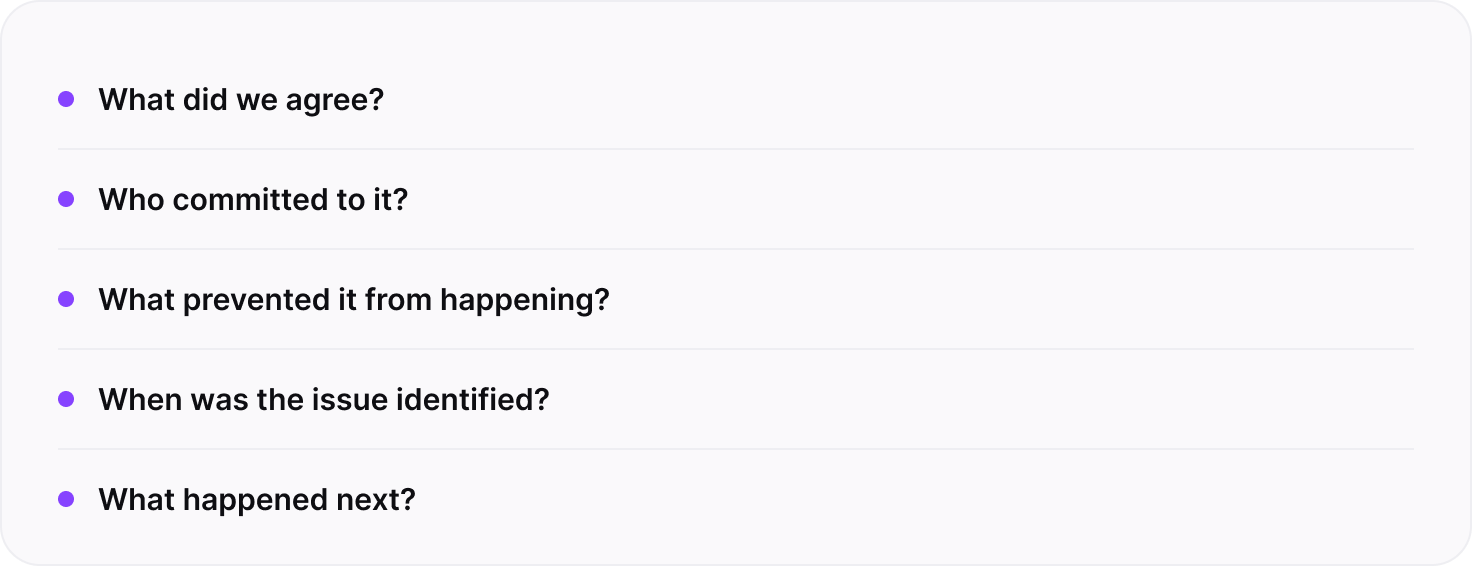
Those questions shouldn’t require somebody to reconstruct the week from meeting notes, emails and memory.
The answers should already exist as part of the normal planning process.
That creates a different type of accountability.
It becomes less about pointing at somebody after a milestone has moved and more about making commitments and obstacles visible while the team still has time to respond.
That’s healthier for the project because problems can be discussed as operational issues rather than saved until they become commercial arguments.
That 90% versus 24% gap is worth coming back to.
Nearly 90% of contractors having a defined project management playbook suggests the industry largely understands what good project management is supposed to look like.
Only 24% applying it consistently suggests something else.
Knowing isn’t the same as doing.
So perhaps the next improvement in project delivery doesn’t come from another methodology or another document telling teams how projects should be managed.
Perhaps it comes from making the agreed process easier to follow every day.
Not because somebody needs another report.
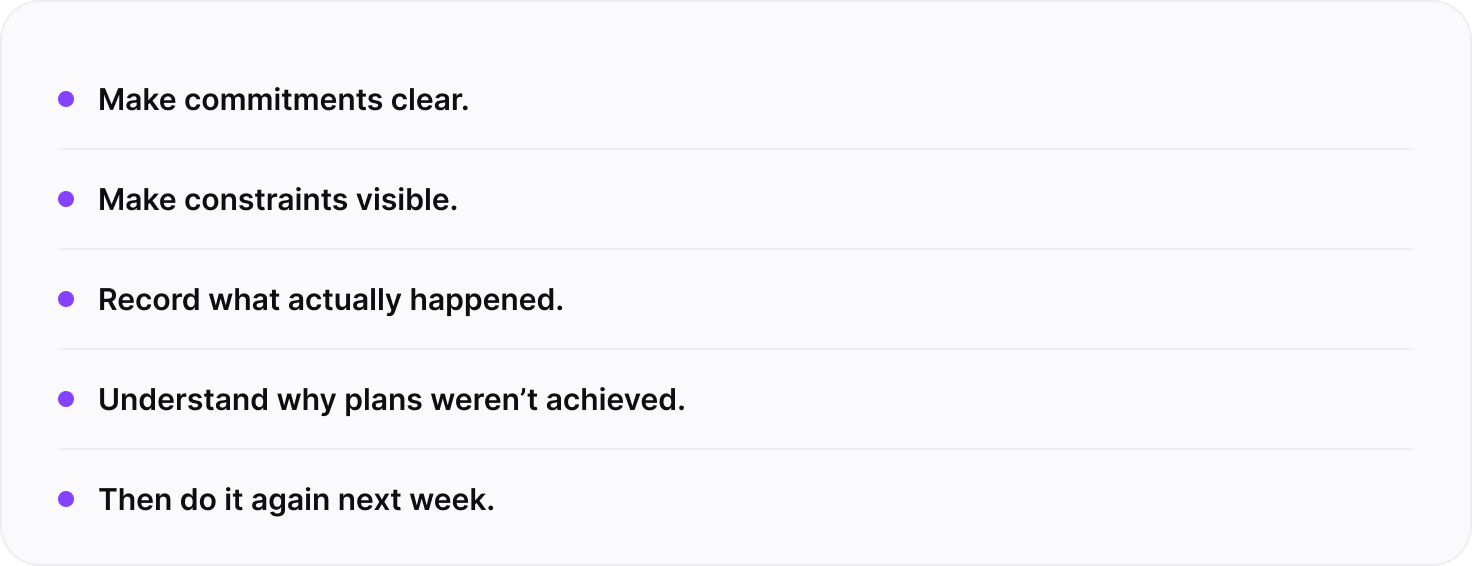
Because consistency is what turns a planning process into a way of delivering the project.
Uconia is designed to support the planning processes project teams already use, rather than asking them to replace those processes with another way of working.
By connecting Primavera P6 with lookahead planning, weekly work plans, constraints, progress and Percent Plan Complete, the actions needed to deliver the programme can stay connected to the programme itself.
Teams can see what was planned, what was committed, what was completed and what got in the way. And planners get a clearer picture of execution without having to reconstruct it afterwards from separate updates.
Software alone won’t make a project perform.
But it can make the behaviours that improve performance much easier to repeat.